Residential Drain Cleaning for Kitchens: Preventing Food and Grease Clogs
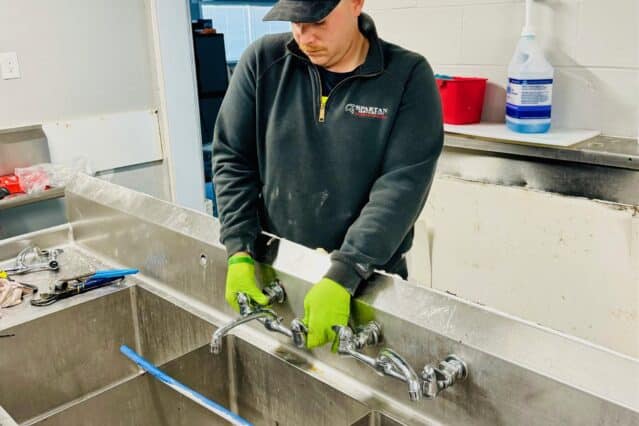
Kitchen drains rarely fail all at once. More often, they get slower by degrees. The sink takes an extra few seconds to empty. A faint odor starts to linger under the strainer. The disposal hums a little longer than it used to. Then one evening, usually when the sink is full of dishwater and someone is already running late, the line stops moving altogether.
That pattern is familiar in residential drain cleaning. Kitchen clogs build differently from bathroom clogs. Hair and soap usually create bathroom stoppages. Kitchens are another matter. Grease cools and sticks to pipe walls. Food scraps collect in that sticky film. Coffee grounds, rice, pasta, eggshell fragments, fibrous vegetables, and detergent residue join the buildup. The result is not always a dramatic plug. Often it is a narrowing of the pipe that gets worse month by month until normal use pushes it over the edge.
Homeowners can prevent many of these problems with better habits and timely maintenance. The key is understanding what actually happens inside the line, not what people assume happens from looking down the sink.
What causes kitchen drain clogs in the first place
The most common misconception is that hot water simply washes grease away. It may move grease a little farther down the line, but that is not the same as removing it. Inside a kitchen drain, especially in colder months or in sections that run through crawl spaces, basements, exterior walls, or under slabs, grease cools quickly. Once it cools, it congeals on the inner wall of the pipe. That sticky coating becomes a trap for everything else.
A household may think it is being careful because no large scraps go down the drain. In practice, very small particles create plenty of trouble when grease is present. Think about the residue left in a frying pan, the starch released by pasta, or the sludge at the bottom of a casserole dish after soaking. Those materials are soft at first, but they bind with grease and detergent into a dense layer. Over time, a pipe with a nominal diameter of 1 1/2 inches can lose a meaningful percentage of its flow area.
The pipe material also matters. Older galvanized lines tend to accumulate buildup faster because the interior surface becomes rough with age. Cast iron can develop scale that catches debris. PVC generally resists buildup better, but even smooth plastic pipe clogs when enough grease and food move through it.
Garbage disposals complicate the picture. They do not make food disappear. They grind solids into smaller particles, which can help certain scraps move through the trap and branch line, but those particles still need adequate water flow and a reasonably clean pipe. A disposal can actually worsen grease-related problems because it makes it easier to send more food into a drain that is already coated inside.
The everyday habits that quietly shorten a drain's life
A lot of drain trouble starts with good intentions and rushed cleanup. One person rinses bacon grease from a skillet because the pan looks clean afterward. Another sends potato peels through the disposal because they seem soft. Someone else washes a pot of soup residue down with very hot water and dish soap, assuming the soap will dissolve everything. Each act looks harmless in isolation. Repeated over a year, they create a service call.
Certain foods are notorious in kitchen lines. Starches are high on the list because they swell and turn gummy. Rice is a classic example. It absorbs water after it enters the line and can bind to grease deposits. Pasta behaves similarly, especially if it is already soft and overcooked. Coffee grounds settle heavily and do not break down in a useful way inside pipes. Eggshells are another frequent offender, less because of their hardness than because the membrane can wrap around disposal components and their gritty fragments can collect in sludge.
Grease deserves special attention because it does not only come from obvious sources like frying oil or bacon drippings. It also comes from butter-based sauces, salad dressings, meat juices, full-fat dairy residue, peanut butter, mayonnaise, and the oily film left on roasting pans. Even if these substances go down in small amounts, they accumulate.
There is also a mechanical side to the problem. Kitchen sink branch lines often have more turns than people realize. A typical line may pass through a P-trap, a horizontal arm, one or more fittings, and then into a larger drain. Every transition is an opportunity for material to slow, settle, or adhere. If the installation has too little slope, too much slope, or a long horizontal run with marginal venting, the drain becomes less forgiving.
Early warnings that should not be ignored
Slow drains almost always give notice before a full stoppage. The trick is knowing which symptoms matter. A sink that drains slowly only when the disposal side is used points to buildup close to the baffle or disposer outlet. A sink that backs up into the second basin suggests the restriction is farther downstream. Gurgling can indicate partial blockage or venting issues. Odor, especially a sour or rancid smell, often signals decomposing food caught in grease.
A homeowner should pay attention to changes in performance, not just obvious failures. If a sink that once cleared in seconds now takes half a minute, that is useful information. In residential drain cleaning, catching a problem while the line is still partially open is easier, cleaner, and usually less expensive than dealing with a complete blockage.
Here are five signs that a kitchen drain is moving toward trouble:
- Water pools briefly before draining, even after a light rinse.
- The sink smells unpleasant, especially after running the disposal.
- One basin backs up when the other is used.
- The disposal seems to drain slower than it grinds.
- Bubbling or gurgling appears after the water is turned off.
None of these guarantees a major clog, but together they point toward buildup that deserves attention.
Why store-bought chemical cleaners often disappoint
Chemical drain cleaners remain popular because they promise speed and simplicity. In kitchen lines, they are often a poor fit. Many are designed to attack organic matter through heat or corrosive action. They may burn through a soft patch of sludge near the top of a stoppage while leaving a thick ring of grease lower in the line. The sink appears improved for a few days, then the problem returns.
There are safety concerns as well. Caustic products can splash during use or linger in standing water. If a line still needs to be opened manually afterward, anyone working on the trap or cable machine may be exposed. Some cleaners also generate heat that can stress older pipes, particularly if multiple products have been mixed over time. While modern drain lines are generally resilient, repeated chemical use is not a maintenance plan.
The bigger issue is that chemicals do not tell you what kind of clog you have. A kitchen sink that drains slowly may have grease buildup, food accumulation, a disposal issue, a venting problem, or a blockage farther down the branch line or even in the main. Pouring in a bottle treats the symptom without clarifying the cause.
Practical prevention that actually works
The best prevention is simple, but it needs consistency. A kitchen drain stays healthier when less grease enters it, fewer solids reach the trap, and the line is flushed with enough water to carry fine residue through. That sounds obvious. The challenge is fitting it into real household routines.
A sink strainer does more than catch visible scraps. It also slows the casual habit of rinsing whole plates directly into the basin. That brief pause matters. Scrape first, rinse second. The fewer solids that enter the line, the less there is to combine with grease.
Grease disposal should be deliberate. Let pans cool, wipe them with paper towels if needed, and place collected grease in a container for the trash once it solidifies. In homes that cook frequently, even a used jar with a lid works well. This is unglamorous advice, but it is among the most effective.
Water use matters too. A disposal should always run with a solid flow of cold water, not a token trickle. Cold water helps grease stay firmer so the disposal can chop and move accompanying particles instead of smearing softened fats throughout the chamber. After grinding, keep the water running long enough to move material beyond the trap. Many people stop too soon.
For households that want a straightforward routine, this short checklist covers the essentials:
- Scrape food into the trash or compost before rinsing dishes.
- Collect grease in a container, never in the sink.
- Use sink strainers in both basins.
- Run cold water before, during, and after disposal use.
- Flush the drain periodically with hot tap water and dish soap only when the line is already flowing freely.
That last point deserves nuance. Hot tap water and dish soap are helpful as a light maintenance rinse for a drain that is functioning normally. They are not a cure for a blocked line, and they should not be poured into a sink that is already backing up. Once a line is restricted, water and soap may simply add volume without clearing the underlying buildup.
Garbage disposals help, but only within limits
Disposals are useful tools when used correctly. They are not miniature waste processors. Soft, nonfibrous scraps in modest amounts are generally fine. Problems begin when users treat the unit like a catch-all.
Fibrous foods are a common source of callbacks. Celery strings, corn husks, onion skins, and artichoke leaves can wrap around moving parts or collect at rough points in the piping. Starches are just as troublesome. A disposal turns mashed potatoes into an even more effective paste. Large quantities of pasta and rice can overwhelm a branch line that is only partially clean.
Ice cubes and citrus peels get mentioned often as disposal-cleaning tricks. They have limited value. Ice can help knock residue off some components, and citrus can freshen odor temporarily, but neither addresses grease lining the downstream https://johnathanxewp219.nexorafield.com/posts/residential-drain-cleaning-checklist-for-a-problem-free-home piping. People sometimes mistake a cleaner-smelling sink for a cleaner drain. Those are not the same thing.
If a disposal hums but does not spin, or if it drains slowly despite sounding normal, the issue may be mechanical, hydraulic, or both. A jammed unit is one thing. A partially occluded drain line is another. In many kitchens, the disposer is blamed because it is visible and noisy, while the real problem sits farther along the pipe.
Cleaning methods professionals use, and when they make sense
Not every kitchen clog calls for the same approach. Good residential drain cleaning depends on location, severity, pipe condition, and access. An experienced technician starts by figuring out whether the blockage is in the trap, the branch line, the stack connection, or beyond.
For light to moderate buildup close to the sink, removing and cleaning the trap may solve the immediate problem. This is especially true when a foreign object has fallen in, or when grease and food have collected just below the strainer or disposer outlet. It is messy but straightforward.
Cable snaking is the next common step. A drain cable can bore through a localized clog and restore flow. That is often enough to get a family back in service quickly. But there is an important trade-off. Snaking opens a path. It does not always clean the full internal diameter of a grease-coated line. If the pipe walls remain heavily lined, the drain may slow again sooner than expected.
That is where hydro jetting sometimes enters the conversation. In appropriate piping and with proper assessment, a jetter uses pressurized water to scour grease and residue from the inside of the line more thoroughly than a cable. It can be highly effective in kitchen drains with chronic buildup. It is not suitable in every situation, particularly where pipes are fragile, poorly connected, or otherwise compromised. This is one reason inspection and judgment matter more than one-size-fits-all recommendations.
A small inspection camera can also be valuable, especially when a kitchen sink has recurring problems despite previous cleaning. The camera may reveal heavy grease scale, a belly in the line, offset joints, or an installation defect that no amount of routine cleaning will permanently fix.
The difference between a maintenance issue and a plumbing issue
Some kitchen drain problems are preventable habits. Others are design or condition issues disguised as clogs. A line with insufficient slope may hold water and solids. An undersized branch serving a busy kitchen may be more vulnerable than expected. Older homes sometimes have modifications under the sink that look convenient but create poor flow. Accordion-style flexible drain connectors are a prime example. Their corrugated interiors trap grease and debris quickly. They may be easy to install, but they are a frequent source of chronic slowdowns.
Venting matters too. If air cannot move properly through the system, drains may gurgle and empty slowly even when the line is not severely clogged. Homeowners tend to focus on what they can reach under the sink, but a healthy drain depends on the entire path functioning as a system.
There are also cases where the kitchen sink is merely the first fixture to show a larger problem. If the dishwasher backs up into the sink, or if the laundry line and kitchen line seem to affect each other, the restriction may sit farther downstream. A main line issue can first present as a kitchen complaint because that branch handles a heavy mix of water and organic residue.
What homeowners can safely do on their own
There is a reasonable middle ground between ignoring the problem and taking apart half the plumbing. If the sink is draining slowly but not fully blocked, a homeowner can start with the basics. Remove and clean the sink strainer. Check the disposal chamber for visible debris after disconnecting power appropriately. Flush with running water. If the setup has an accessible trap and the user is comfortable with simple plumbing, cleaning the trap can remove a surprising amount of sludge.
A plunger can work on certain sink clogs, especially in double-basin sinks where one side is sealed while the other is plunged. The goal is to move a localized obstruction, not to force grease farther down the line. Results vary, but it is a reasonable low-risk step.
What should be avoided is just as important. Repeatedly dumping boiling water into PVC systems is not wise. Using chemical cleaners before disassembling pipes creates hazards. Forcing improvised tools deep into the line can damage fittings or become stuck. And if more than one fixture is involved, the problem may be beyond the sink branch anyway.
When it is time to call for professional residential drain cleaning
A single slow drain after a heavy holiday meal may respond to a simple cleanup. A recurring kitchen clog usually deserves professional attention. If the same sink has slowed several times in six to twelve months, there is almost always more going on than a one-off food blockage.
Call sooner rather than later if the sink backs up into another basin, if wastewater returns when the dishwasher drains, if gurgling affects nearby fixtures, or if the line has already been treated with chemicals and still does not clear. These are signs that a surface-level fix may not be enough.
Professional service is also sensible in older homes where pipe condition is uncertain. A technician can choose a method that matches the system rather than applying maximum force to unknown piping. In some cases, a careful cable cleaning is the right answer. In others, a more thorough cleaning or a camera inspection is justified. The best outcome is not just restoring flow today, but reducing the odds of another blockage next month.
A realistic maintenance rhythm for busy households
Most kitchens do not need constant intervention. They need sensible habits and occasional attention. A household that cooks lightly may go years without an issue by simply keeping grease and food scraps out of the drain. A household that cooks daily, uses the disposal heavily, and washes many pans may benefit from a more deliberate schedule.
That might mean taking five minutes once a week to clean strainers and wipe greasy pans before washing. It might mean a monthly hot-water flush with dish soap while the line is moving freely. In homes with a history of slow kitchen drains, an annual or every-other-year maintenance cleaning can be worthwhile, particularly before the holiday cooking season puts extra stress on the system.
The point is not to sterilize the drain or obsess over every crumb. Kitchen plumbing is built for regular use. It just performs better when it is not asked to carry substances that solidify, swell, or cling.
A clean-flowing kitchen drain is one of those household systems people only notice when it fails. Yet preventing failure is usually less dramatic than repairing it. Scrape first. Save grease for the trash. Use the disposal with restraint. Pay attention to slowdowns early. And when the signs point to deeper buildup, professional residential drain cleaning is often the fastest route back to a kitchen that works the way it should.
Spartan Plumbing Services
Address: 760 107th St S, Tacoma, WA 98444
Phone number: +12534998773
FAQ About Residential Drain Cleaning
How much does it cost to have someone clean your drains?
Professional drain cleaning costs between $147 and $352 on average, with most homeowners paying around $246. The final price is heavily determined by the type of drain affected, the clearing method needed, and your geographic location.
How much does it cost to clean a drain line?
Professional drain cleaning costs between $147 and $352 on average, with most standard residential jobs landing right around $246. However, your final bill can scale from $100 to over $800 depending entirely on which drain is clogged and the method required to clear it.
Is professional drain cleaning worth it?
Yes, professional drain cleaning is worth it because it clears deep buildup and prevents expensive plumbing emergencies.